Introduction: Defining Yale’s Legacy
In the landscape of global higher education, few names carry the prestige and historical depth of Yale University. Located in New Haven, Yale is one of the oldest and most respected universities in the United States, known for its academic excellence, influential alumni, and commitment to intellectual exploration.
Founded in 1701, Yale has grown from a small colonial college into a world-leading institution that shapes leaders across politics, business, arts, law, and science. This article explores Yale’s history, academic structure, student life, global impact, and why it continues to be one of the most sought-after universities in the world.
A Brief History of Yale University
The origins of Yale University date back to the early 18th century when it was established as the Collegiate School in 1701.
Early Foundations
Yale was created by clergy leaders who aimed to:
- Train ministers and scholars
- Promote classical education
- Preserve intellectual traditions
Naming and Growth
In 1718, the institution was renamed Yale College in honor of Elihu Yale, a benefactor whose donations helped strengthen the university.
Over time, Yale expanded beyond theology into a full university offering diverse academic disciplines.
Evolution into a Global Institution
Today, Yale stands alongside elite institutions such as Harvard University and Princeton University as a leader in global education.
Academic Structure: A World of Intellectual Depth
One of the defining strengths of Yale University is its flexible and interdisciplinary academic structure.
Yale College (Undergraduate Division)
Yale College offers a liberal arts education where students explore a wide range of subjects before specializing.
Popular fields include:
- Political Science
- Economics
- History
- Computer Science
- Psychology
Graduate and Professional Schools
Yale also includes prestigious schools such as:
- Yale Law School
- Yale School of Medicine
- Yale School of Management
- Yale School of Art
Each school is globally recognized for excellence in its field.
Residential College System: A Unique Student Experience
One of Yale’s most distinctive features is its residential college system.
What Are Residential Colleges?
Students are assigned to one of 14 residential colleges that function as:
- Living communities
- Academic support centers
- Social hubs
Benefits of the System
This structure creates:
- Strong student connections
- Personalized support
- A sense of belonging
It helps students feel part of a close-knit academic family within a large university.
Campus Life in New Haven
Life at Yale University is deeply connected to the city of New Haven.
Historic and Beautiful Campus
Yale’s campus features:
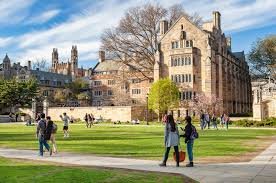
- Gothic-style architecture
- Ivy-covered buildings
- Modern research facilities
It is widely regarded as one of the most beautiful university campuses in the world.
Student Activities
Students participate in a wide variety of activities, including:
- Debate societies
- Cultural organizations
- Performing arts groups
- Sports teams
The Arts at Yale
Yale has a strong emphasis on the arts, with institutions like the Yale School of Drama producing world-class actors and directors.
Admission Process: Highly Competitive Excellence
Gaining admission to Yale University is extremely competitive.
Key Requirements
Applicants must demonstrate:
- Outstanding academic performance
- Strong standardized test scores (where required)
- Leadership experience
- Extracurricular achievements
- Personal essays
Holistic Admissions
Yale evaluates students based on:
- Intellectual curiosity
- Character and integrity
- Creativity and passion
- Potential for impact
Acceptance rates are typically below 5%, making it one of the most selective universities in the world.
Academic Excellence and Faculty
World-Class Professors
Yale faculty includes:
- Nobel Prize winners
- Pulitzer Prize recipients
- Leading researchers and scholars
Research Strength
Yale is a leader in research areas such as:
- Medicine
- Law
- Environmental science
- Social sciences
Yale Law School: A Global Powerhouse
One of Yale’s most prestigious divisions is Yale Law School.
Key Features
- Small class sizes
- Focus on legal theory
- Strong judicial influence
Global Impact
Graduates often become:
- Supreme Court judges
- International lawyers
- Policy leaders
Yale School of Management
The Yale School of Management focuses on leadership and global business education.
Focus Areas
- Ethics in business
- Global leadership
- Social responsibility
Arts and Humanities Excellence
Yale is also a global leader in arts and humanities.
Yale School of Art
Known for producing influential artists in contemporary art.
Yale Drama and Music
The university has strong programs in:
- Theater
- Music
- Film studies
Many graduates succeed in Hollywood and global entertainment industries.
Global Influence and Alumni Network
Graduates of Yale University are among the most influential people in the world.
Notable Alumni Fields
- Politics and government
- Business leadership
- Arts and entertainment
- Law and judiciary
Famous Alumni
Yale has produced:
- U.S. Presidents
- Supreme Court justices
- Global CEOs
Yale and the Ivy League Tradition
As a member of the Ivy League, Yale shares prestige with universities like Princeton University.
What Makes Yale Unique?
- Strong emphasis on humanities and arts
- Residential college system
- Balance between tradition and innovation
Financial Aid and Accessibility
Despite its elite status, Yale University is committed to accessibility.
Need-Based Aid
Yale offers generous financial aid based on family income.
- Many students pay reduced or zero tuition
- No-loan policy for most aid packages
Commitment to Diversity
Yale actively supports students from diverse economic and cultural backgrounds.
Student Life: Tradition and Community
Intellectual Environment
Students are constantly engaged in:
- Critical discussions
- Academic debates
- Collaborative learning
Social Life
Yale offers a vibrant campus life with:
- Cultural events
- Music and theater performances
- Student traditions
Traditions
Yale is known for unique traditions such as campus celebrations and long-standing student rituals.
Challenges of Studying at Yale
Academic Pressure
Students face:
- High expectations
- Intensive coursework
- Competitive environment
Mental Health Awareness
Yale provides resources to support student well-being and balance.
Career Opportunities After Yale
Graduates of Yale University are highly successful globally.
Career Paths
- Law
- Medicine
- Business
- Public policy
- Arts and media
Global Employability
Yale degrees are recognized worldwide, opening doors to top organizations and institutions.
Future of Yale University
Expanding Global Reach
Yale continues to attract students from over 100 countries.
Research Innovation
Future focus areas include:
- Climate change
- Artificial intelligence
- Global health
Digital Learning
Yale is increasingly integrating digital tools into education and research.
Conclusion: A Timeless Symbol of Excellence
Yale University stands as one of the world’s most prestigious and influential universities. From its historic roots in New Haven to its global impact today, Yale continues to shape leaders, thinkers, and innovators across all fields.
Its unique blend of tradition, academic excellence, residential community life, and global influence makes it a truly exceptional institution. While admission is highly competitive, the opportunities it offers are transformative and lifelong.
Leave a Reply